

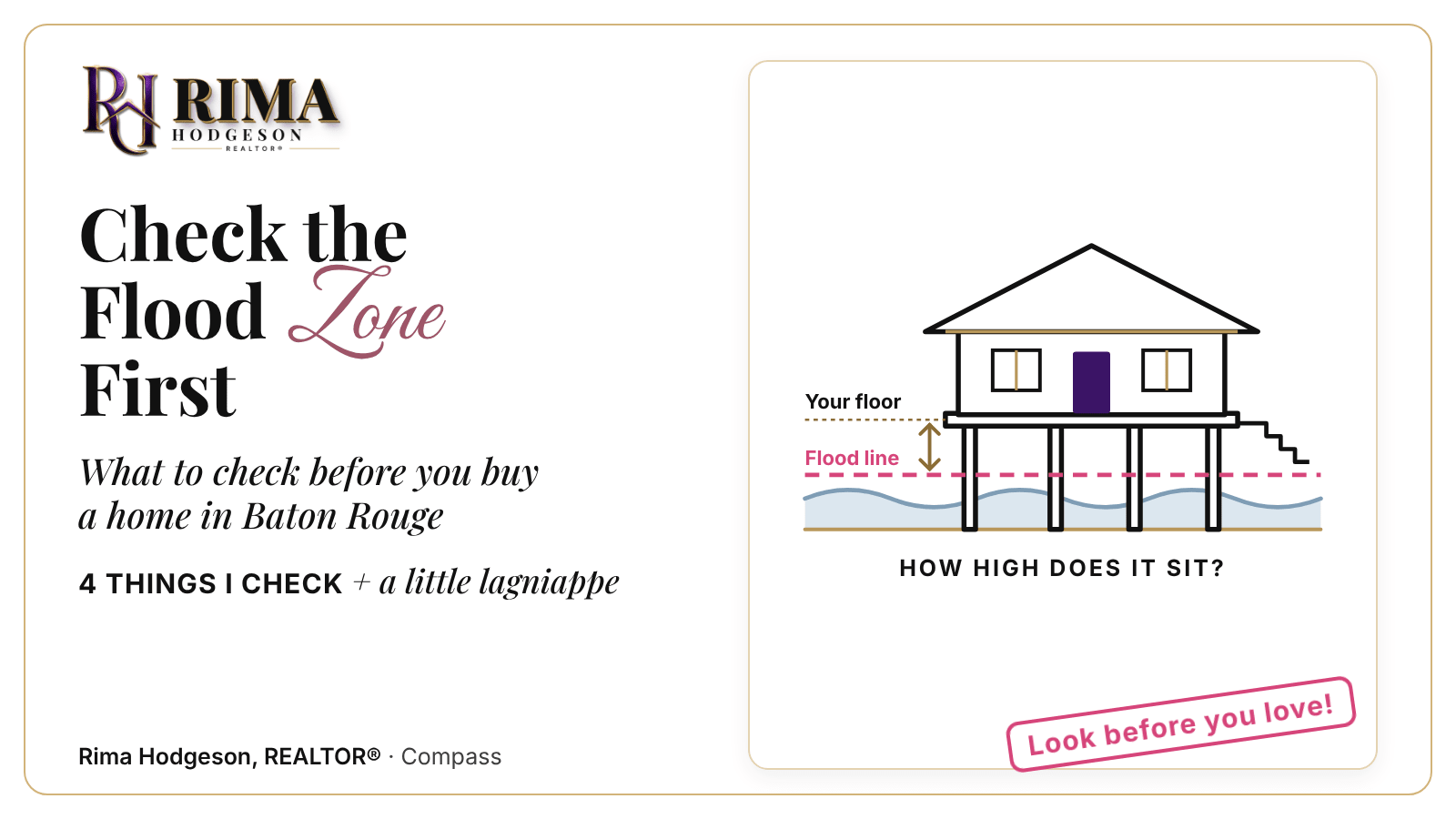

Before you fall in love with a house, let's check one thing first: the water.
I grew up in New Orleans and I've lived in Baton Rouge for more than 35 years, so I know how much we love our rivers, our bayous and our rainy afternoons. I also know a pretty kitchen won't keep your feet dry. Before any buyer of mine makes an offer, we look at four things: the flood zone, the seller's flood answers, the elevation certificate, and flood insurance quotes.
The quick answer: Before you make an offer on a Baton Rouge home, check four things: (1) the home's FEMA flood zone, (2) the flood answers on the seller's Property Disclosure Document, (3) the elevation certificate, if there is one, and (4) real flood insurance quotes. Most homeowners policies don't cover flood, so plan for it no matter what the map says.
Jump to:
Flood zones Find your zone Myth or fact The seller's answers Elevation certificate Insurance quotes Questions
What Is a Flood Zone?
What does it mean if a house is in a flood zone? A flood zone is FEMA's label for how likely an area is to flood. You'll see it as letters on FEMA's flood maps.
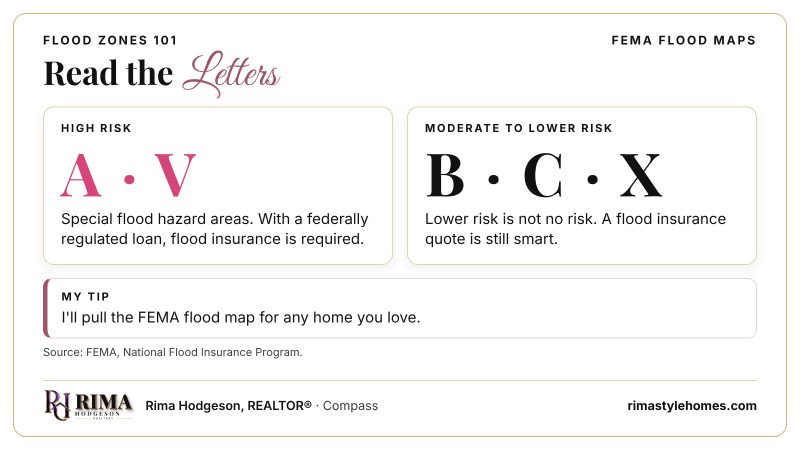
- Zones that start with A or V are high-risk areas. FEMA calls them special flood hazard areas.
- Zones B, C and X are moderate- to lower-risk areas.
Why it matters: if a home is in a high-risk zone and your mortgage comes from a federally regulated lender, flood insurance is required. And FEMA says homes in high-risk areas have about a 1 in 4 chance of flooding at least once during a 30-year mortgage.
How Do I Find a Home's Flood Zone in Baton Rouge?
How can I check if a house is in a flood zone? You have a few easy options:
- FEMA's Flood Map Service Center. It's FEMA's official home for flood maps. Type in the address to see the zone.
- The Louisiana FloodMaps Portal from the LSU AgCenter. It shows FEMA's flood maps over road maps and aerial photos, plus the base flood elevation. Geaux Tigers!
- Your parish floodplain office. They can tell you which map is in effect and whether an elevation certificate is on file.
Or skip the homework: I'll pull the FEMA flood map for any home you love. Maps get updated, so I always check the current one.
Myth or Fact: "It's Not in a Flood Zone, So I'm Fine"
Can a house outside a flood zone still flood? Yes. That one's a myth! FEMA says nearly one-third of flood insurance claims from 2014 to 2024 came from outside high-risk areas. If you were in Baton Rouge in August 2016, you remember water showing up in places nobody expected.
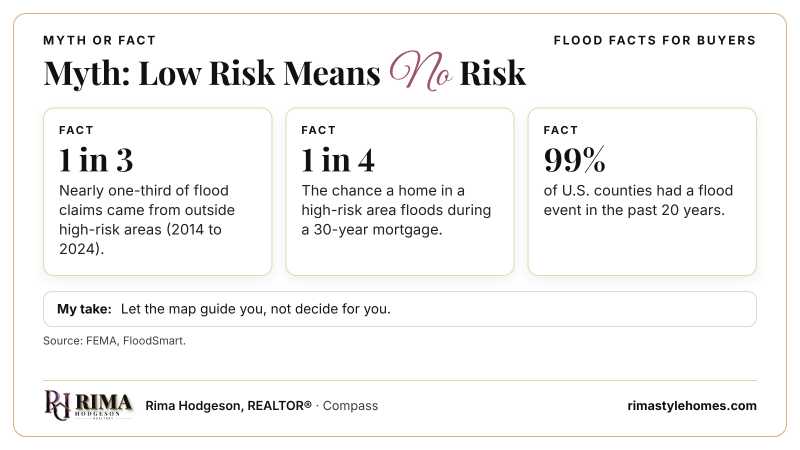
A lower-risk zone usually means a lower flood insurance price, not zero risk. So here's what I tell my buyers: let the map guide you, not decide for you.
What Does the Seller Have to Tell Me About Flooding?
Do Louisiana sellers have to disclose flooding? Most Louisiana sellers fill out the Property Disclosure Document from the Louisiana Real Estate Commission, and Section 6 is all about flooding. It asks:
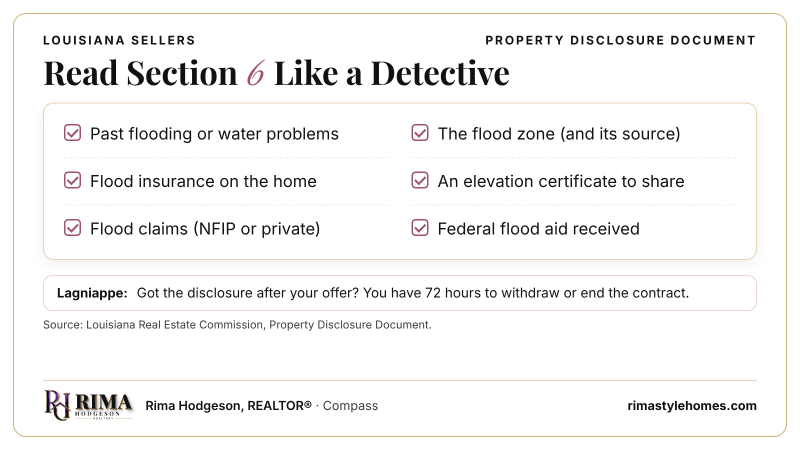
- Has the land, or any building on it, ever flooded or had water problems?
- What is the flood zone, and where did that info come from?
- Is there flood insurance? (If yes, a copy of the policy's declarations page is attached.)
- Does the seller have an elevation certificate to share?
- Has anyone made a flood insurance claim? (That includes the National Flood Insurance Program, or NFIP, and private companies.)
- Has the property received federal flood disaster aid?
That last one is a big deal. If a home got certain federal flood aid, flood insurance may have to stay on the property. That duty passes to the next owner, and FEMA says the seller must tell the new owner about it.
A little Louisiana lagniappe: if you get the disclosure after you make your offer, you have 72 hours to withdraw your offer or end the contract. A disclosure isn't a warranty, so I read every line with you.
What Is an Elevation Certificate (and Can It Save Me Money)?
What is an elevation certificate? It's a form that shows how high a building sits compared to how high local floodwaters are expected to get. Think of it as a measuring stick for the house.
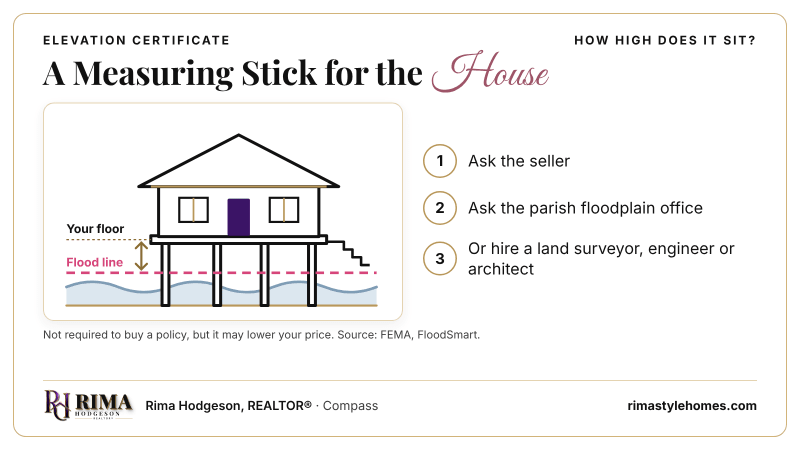
Under FEMA's current pricing (called Risk Rating 2.0), you don't need an elevation certificate to buy a policy. It can still help, though. If it shows the home sits up high, it may lower your price.
Where to find one:
- Ask the seller. The disclosure form asks if they have one to share.
- Ask the parish floodplain office if one is on file.
- If not, a land surveyor, engineer or architect can make one.
When Should I Get Flood Insurance Quotes?
When should I shop for flood insurance? Before you make an offer. The price can change your monthly budget, so I want you to know it early.
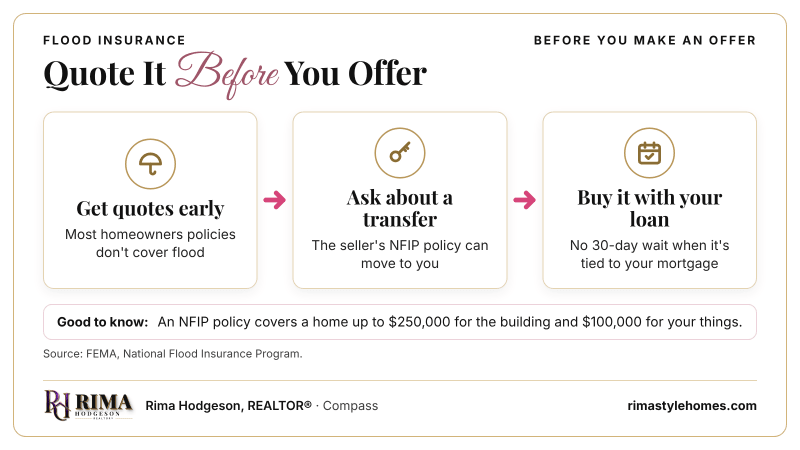
- Your homeowners policy likely won't cover flood. FEMA says most don't. Flood insurance is its own policy.
- Ask if the seller's flood policy can transfer to you. FEMA says an NFIP policy can be transferred to the buyer, and its discount can come along.
- Buying with a loan? No 30-day wait. A new flood policy usually takes 30 days to start, but there's no wait when you buy it with your mortgage.
- Know the limits. For a home, an NFIP policy covers up to $250,000 for the building and $100,000 for your things. Private flood insurance is another option to compare.
- Keep an eye on Congress. The NFIP has to be renewed from time to time. Right now it runs through Dec. 11, 2026. If it lapses, new NFIP policies pause, so don't wait.
My Flood-Check Recipe
Like a good gumbo, the order matters:
- Check the FEMA flood zone.
- Read Section 6 of the seller's disclosure.
- Ask for the elevation certificate.
- Get flood and homeowners insurance quotes.
- Ask if the seller's flood policy can transfer.
- Then make your offer, with your eyes wide open.
Bonus tip: drive by after a big rain to see how the street drains.
Questions Buyers Ask Me
Is flood insurance required in Baton Rouge?
It depends on the home and your loan. If the home is in a high-risk zone (A or V) and your mortgage comes from a federally regulated lender, yes. Even when it's not required, I ask every buyer to get a quote.
Does homeowners insurance cover flooding?
Usually not. FEMA says most homeowners policies don't cover flood damage. Flood insurance is a separate policy.
Can I take over the seller's flood insurance?
Often, yes. FEMA says an NFIP policy can be transferred to the new owner, and its discount can come with it. Ask early.
How long does flood insurance take to start?
Usually 30 days. If you buy it when you close on your mortgage, there's no wait.
Let's Check Your Dream Home Together
Buying a home should feel exciting, not scary. Whether you're touring this weekend or just starting to look, I'll pull the flood map, read the disclosure with you, and help you line up your quotes. You are never a transaction to me.

Reach out either way. I'm happy to help.
Call or Text Rima: 225-892-2131 See my buyer plan
More from my blog and website:
- Budgeting for your move? Read Surprise! The Home-Buying Bills Nobody Warns You About.
- Saving up? See Do You Really Need 20% Down?
- Watching rates? Here's what the latest rate dip means for you.
- New to buying? Walk through my 10 home-buying steps.
- Picking a neighborhood? Browse my Baton Rouge area guides.
Where My Info Comes From
Credit where it's due:
- FEMA and FloodSmart (National Flood Insurance Program): flood zones, claims data (2014 to 2024), the 30-day wait, coverage limits, elevation certificates, Risk Rating 2.0, policy transfers and the disaster aid rule
- Louisiana Real Estate Commission: the Property Disclosure Document (Section 6 and the 72-hour rule)
- LSU AgCenter: the Louisiana FloodMaps Portal
- National Association of REALTORS®: the NFIP's current end date (Dec. 11, 2026)
Flood maps, rules and prices change, and every home is different. This is general info, not insurance or legal advice. Your insurance agent can quote your exact price.